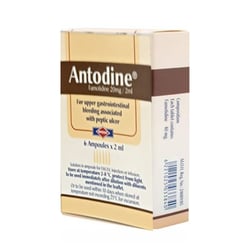
Antodine 20mg/2ml i.m. or i.v. 3 amps.
Description:
Antodine 20mg/2ml i.m. or i.v. 3 amps. is a prescription injectable medicine containing famotidine, a histamine H2-receptor antagonist (H2 blocker) used to reduce gastric acid secretion. It is indicated for the treatment and prevention of acid-related gastrointestinal conditions such as peptic ulcer disease and gastroesophageal reflux, and for use as an anaesthetic adjunct to reduce the risk of acid aspiration during surgery. Each ampoule is designed for intramuscular (i.m.) or intravenous (i.v.) administration by healthcare professionals in hospital or clinical settings.
Indications:
- Treatment of active duodenal ulcer and gastric ulcer.
- Management of gastroesophageal reflux disease (GERD) and reflux esophagitis associated with heartburn and acid regurgitation.
- Relief and prevention of symptoms related to hyperacidity such as epigastric pain, burning, and discomfort due to excess stomach acid.
- Short-term treatment of conditions with pathological hypersecretion of gastric acid (e.g., Zollinger–Ellison syndrome) as directed by a physician.
- Prevention of aspiration pneumonitis (Mendelson’s syndrome) as an anaesthetic adjunct in patients undergoing prolonged operations, caesarean section, or in obese patients at increased risk of gastric regurgitation.
- Situations where oral therapy is not feasible or not tolerated and parenteral H2-blocker therapy is required.
Active Ingredients / Key Components:
- Famotidine – 20 mg per 2 ml ampoule (10 mg/ml).
- Excipients: The full list of inactive ingredients (e.g., solvents, stabilizers, preservatives) is not specified in the available information (For full ingredient information, please check the product leaflet or the manufacturer’s official website.). Please refer to the official package insert for complete excipient details.
Dosage & Administration / How to Use:
- Antodine 20mg/2ml is for intramuscular (i.m.) or intravenous (i.v.) use only and must be administered by a qualified healthcare professional.
- Typical adult dose (parenteral): Common regimens include 20 mg famotidine every 12 hours by slow i.v. injection or i.m. injection, or as directed by the treating physician based on the patient’s condition and severity. Exact dosing must follow the official prescribing information and physician judgment.
- Intravenous administration: Usually given as a slow i.v. injection over at least 2 minutes, or diluted and administered as an infusion according to hospital protocol.
- Intramuscular administration: Inject deeply into a large muscle mass using aseptic technique.
- Pre-operative use (anaesthetic adjunct): Dose and timing are determined by the anaesthetist or surgeon to reduce gastric volume and increase gastric pH before surgery or caesarean section.
- Dosage adjustments may be required in patients with renal impairment; the physician will modify the dose or dosing interval accordingly.
- Not intended for self-administration. Do not use at home unless specifically instructed and supervised by a healthcare provider.
- Do not mix in the same syringe with other injectable drugs unless compatibility is confirmed by the prescribing information.
Clinical Benefits:
- Reduces gastric acid secretion by selectively blocking histamine H2 receptors on gastric parietal cells, thereby lowering stomach acidity.
- Promotes healing of gastric and duodenal ulcers by decreasing acid exposure and irritation of the mucosa.
- Relieves symptoms of heartburn, acid reflux, and epigastric pain associated with GERD and hyperacidity.
- Helps prevent aspiration pneumonitis during surgery by increasing gastric pH and reducing gastric volume in at-risk patients.
- Provides an effective parenteral option when oral H2-blocker therapy is not possible (e.g., vomiting, pre- and post-operative periods, critically ill patients).
Warnings & Contraindications:
- Contraindicated in patients with known hypersensitivity to famotidine, other H2-receptor antagonists, or any component of the formulation.
- Use with caution in patients with moderate to severe renal impairment; dose adjustment is required to avoid accumulation and increased risk of adverse effects.
- Gastric malignancy should be excluded before initiating treatment for gastric ulcer or persistent dyspepsia, as symptom relief may mask underlying cancer.
- Use with caution in elderly patients, as they may be more susceptible to central nervous system side effects such as confusion or dizziness.
- Consult your doctor before use if pregnant or planning pregnancy. Famotidine should be used during pregnancy only if clearly needed and prescribed by a physician.
- Consult your doctor before use if breastfeeding; famotidine may be excreted in breast milk. A risk–benefit assessment is required.
- Inform your doctor about all other medications you are taking, including over-the-counter drugs and supplements, as interactions may occur.
- Use with caution in patients with a history of liver disease, although famotidine is primarily renally excreted.
- May cause dizziness or headache; patients should be cautioned regarding activities requiring alertness until they know how the medicine affects them.
- Not intended to diagnose, treat, cure, or prevent any disease without proper medical supervision.
- Keep out of reach of children.
Side Effects:
- Common side effects may include headache, dizziness, constipation, diarrhea, nausea, or abdominal discomfort.
- Less common side effects can include fatigue, rash, pruritus, or dry mouth.
- Rare but serious reactions may include hypersensitivity reactions (e.g., urticaria, angioedema, bronchospasm, anaphylaxis), severe skin reactions, or cardiac arrhythmias, especially with rapid i.v. administration.
- CNS effects such as confusion, agitation, or hallucinations have been reported, particularly in severely ill or elderly patients.
- If you experience difficulty breathing, swelling of the face or throat, severe rash, chest pain, or any other severe or unexpected symptom, seek immediate medical attention.
Storage Instructions:
Store in a cool, dry place away from direct sunlight. Protect from excessive heat and freezing. Keep ampoules in the original packaging until use. Do not use if the solution is discolored, cloudy, or contains particles. Keep container tightly closed where applicable. Keep out of reach of children.
Specifications:
- Product type: Injectable prescription medicine (H2-receptor antagonist).
- Strength: 20 mg famotidine per 2 ml ampoule (10 mg/ml).
- Route of administration: Intramuscular (i.m.) or intravenous (i.v.) use only.
- Pack size: 3 ampoules per pack.
- Form: Sterile solution for injection.
Disclaimer: All pharmacy products are intended for general use only and do not replace professional medical advice, diagnosis, or treatment. Always consult a healthcare provider before use. Results may vary, and no specific outcomes are guaranteed. Products are not intended to diagnose, treat, cure, or prevent any disease unless stated. Follow label instructions carefully, as misuse may cause adverse effects. Compliance with local laws is the customer’s responsibility.


 You can add a rating once you purchase the product through the My Orders page

