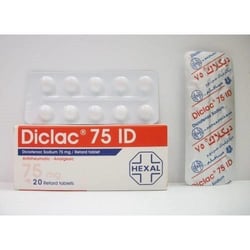
Diclac Id 75 Mg 20 Tablets
Description:
Diclac Id 75 mg is a prescription oral medicine containing diclofenac sodium, a non-steroidal anti-inflammatory drug (nsaid) with strong analgesic, anti-inflammatory, and antipyretic properties. It is formulated as prolonged-release tablets to provide sustained pain relief and inflammation control throughout the day. Diclac Id 75 mg is commonly used for the management of musculoskeletal pain, osteoarthritis, rheumatoid arthritis, and other painful inflammatory conditions in adults. As a systemic pain reliever and anti-inflammatory medication, it helps reduce swelling, relieve pain, and improve mobility in affected joints and tissues.
Indications:
- Relief of signs and symptoms of osteoarthritis (joint pain, stiffness, swelling).
- Relief of signs and symptoms of rheumatoid arthritis and other inflammatory joint diseases.
- Treatment of acute musculoskeletal pain such as back pain, neck pain, and soft tissue injuries (sprains, strains).
- Management of pain and inflammation associated with acute gout attacks (when prescribed by a doctor).
- Relief of mild to moderate acute pain where an nsaid is indicated, such as postoperative or post-traumatic pain (as directed by a physician).
- Reduction of inflammation and associated pain in various rheumatic and non-rheumatic conditions.
Active Ingredients / Key Components:
- Diclofenac sodium – 75 mg per prolonged-release tablet.
- Excipients: The full list of inactive ingredients (tablet core and coating components, stabilizers, coloring agents, etc.) is not available in the provided information. Please refer to the official package leaflet for a complete excipient list.
Dosage & Administration / How to Use:
- Adults: The usual recommended dose is 75 mg to 150 mg diclofenac sodium per day, divided according to medical advice. Diclac Id 75 mg prolonged-release tablets are typically taken once daily (75 mg) or as prescribed by the physician.
- Swallow the tablet whole with a glass of water; do not crush, chew, or break, as this is a prolonged-release formulation.
- Preferably take with or after food to help reduce the risk of gastrointestinal side effects.
- Use the lowest effective dose for the shortest duration necessary to control symptoms.
- Not recommended for children and adolescents unless specifically prescribed by a specialist.
- Patients with liver, kidney, or cardiovascular disease, or elderly patients may require dose adjustment and close medical supervision.
- Do not exceed the dose prescribed by your doctor. If you miss a dose, take it as soon as you remember unless it is almost time for the next dose. Do not double the dose.
Clinical Benefits:
- Provides effective pain relief in osteoarthritis, rheumatoid arthritis, and other inflammatory joint diseases.
- Reduces inflammation, swelling, and stiffness, improving joint mobility and daily function.
- Prolonged-release formulation offers sustained symptom control over an extended period, reducing the need for multiple daily doses.
- Has antipyretic (fever-reducing) action when inflammation is associated with elevated body temperature.
Warnings & Contraindications:
- Contraindicated in patients with known hypersensitivity (allergy) to diclofenac, other nsaids (such as ibuprofen, aspirin), or any component of the formulation.
- Do not use in patients with active, suspected, or history of peptic ulcer, gastrointestinal bleeding, or perforation related to previous nsaid therapy.
- Contraindicated in patients with severe heart failure, severe hepatic impairment, or severe renal impairment.
- Not to be used in the third trimester of pregnancy due to risk of harm to the fetus and complications during delivery.
- Use with caution in patients with cardiovascular disease or risk factors (e.g., hypertension, hyperlipidemia, diabetes, smoking) as nsaids may increase the risk of serious cardiovascular thrombotic events (myocardial infarction, stroke).
- Use with caution in patients with a history of gastrointestinal disease (ulcerative colitis, Crohn’s disease), bleeding disorders, asthma, or allergic conditions.
- May cause fluid retention and edema; caution in patients with hypertension, heart failure, or kidney disease.
- Avoid concomitant use with other nsaids, including selective cox-2 inhibitors, unless specifically advised by a doctor.
- May interact with anticoagulants, antiplatelet agents, antihypertensives, diuretics, certain antidepressants, and other medications; inform your doctor about all medicines you are taking.
- Consult your doctor before use if pregnant (first and second trimester), nursing, taking medications, or have medical conditions such as liver disease, kidney disease, heart disease, hypertension, gastrointestinal disorders, or bleeding tendencies.
- Not intended to diagnose, treat, cure, or prevent any disease on its own; it should be used under medical supervision as part of a treatment plan.
- Keep out of reach of children.
Side Effects:
- Common side effects: nausea, vomiting, abdominal pain, indigestion, diarrhea, constipation, flatulence, headache, dizziness, or skin rash.
- Less common but serious side effects: gastrointestinal bleeding or ulceration (black or bloody stools, vomiting blood), severe abdominal pain, severe skin reactions, swelling of face or tongue, difficulty breathing, chest pain, sudden weakness or slurred speech (possible stroke), or signs of heart attack.
- May cause elevation of liver enzymes or, rarely, serious liver injury; symptoms may include fatigue, loss of appetite, dark urine, yellowing of skin or eyes (jaundice).
- Kidney function impairment may occur, especially in susceptible patients (elderly, dehydrated, or with pre-existing kidney disease).
- Stop use and seek immediate medical attention if you experience signs of allergic reaction (rash, itching, swelling, severe dizziness, trouble breathing) or any severe or unusual symptoms.
Storage Instructions:
Store in a cool, dry place away from direct sunlight. Keep container tightly closed. Keep out of reach of children.
Specifications:
- Form: Prolonged-release tablets for oral use.
- Strength: 75 mg diclofenac sodium per tablet.
- Pack size: 20 tablets per pack.
- Intended for adult use under medical supervision.
Disclaimer: All pharmacy products are intended for general use only and do not replace professional medical advice, diagnosis, or treatment. Always consult a healthcare provider before use. Results may vary, and no specific outcomes are guaranteed. Products are not intended to diagnose, treat, cure, or prevent any disease unless stated. Follow label instructions carefully, as misuse may cause adverse effects. Compliance with local laws is the customer’s responsibility.


 You can add a rating once you purchase the product through the My Orders page

