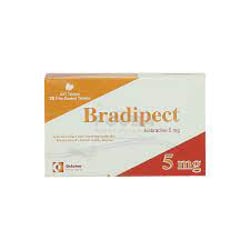
Bradipect 7.5 Mg 28 Tab
Description:
Bradipect 7.5 mg 28 tab is a prescription cardiovascular medicine containing ivabradine, an antianginal and heart rate–lowering agent. It is used in adults with chronic stable angina and/or certain types of chronic heart failure to reduce heart rate by selectively inhibiting the cardiac pacemaker if current in the sinus node. By slowing the heart rate without affecting blood pressure or heart muscle contraction, Bradipect helps improve exercise tolerance, reduce angina attacks, and support long-term heart health under medical supervision.
Indications:
- Chronic stable angina pectoris in adults with coronary artery disease and normal sinus rhythm who have a contraindication or intolerance to beta-blockers, or in combination with beta-blockers when symptoms are inadequately controlled (as per ivabradine standard indications).
- Management of heart rate in selected patients with chronic heart failure with reduced ejection fraction (HFrEF) and sinus rhythm, as determined appropriate by a cardiologist (indication based on ivabradine; confirm with prescribing information).
- Reduction of frequency and severity of angina attacks (chest pain due to myocardial ischemia).
- Improvement of exercise tolerance and reduction of angina-related limitations in daily activities.
Active Ingredients / Key Components:
- Ivabradine – 7.5 mg per film-coated tablet.
- Other tablet excipients (film-coating agents, fillers, binders, etc.) are present but specific inactive ingredients and their concentrations , please check the product leaflet or the manufacturer’s official website.
Dosage & Administration / How to Use:
- Bradipect 7.5 mg is to be used only under the supervision and prescription of a physician, preferably a cardiologist.
- Typical adult dosing for ivabradine in chronic stable angina or chronic heart failure is individualized. Treatment is usually started at a lower strength (e.g., 5 mg twice daily) and may be adjusted by the doctor up to 7.5 mg twice daily based on heart rate and clinical response. Your exact dose and schedule must follow your doctor’s instructions.
- Tablets are usually taken twice daily (morning and evening) with meals to improve absorption and reduce gastrointestinal discomfort, unless your doctor advises otherwise.
- Swallow the tablet whole with a glass of water; do not crush, chew, or split unless your doctor or pharmacist specifically instructs you to do so.
- If you miss a dose, take the next dose at the usual time. Do not double the dose to make up for a missed tablet.
- Do not stop taking Bradipect suddenly without consulting your doctor, as abrupt discontinuation may worsen angina or heart failure symptoms.
- Regular monitoring of resting heart rate, blood pressure, and heart rhythm is recommended during treatment. Your doctor may adjust the dose or discontinue therapy if your resting heart rate becomes too low.
Clinical Benefits:
- Reduces elevated resting heart rate by selective inhibition of the sinus node if current, helping to decrease myocardial oxygen demand.
- Helps reduce the frequency and intensity of angina attacks in patients with chronic stable angina.
- Improves exercise tolerance and physical activity capacity by better control of heart rate and angina symptoms.
- Supports long-term management of certain patients with chronic heart failure by optimizing heart rate control (as per ivabradine clinical use and physician guidance).
Warnings & Contraindications:
- Contraindicated in patients with hypersensitivity to ivabradine or any component of the formulation.
- Contraindicated in patients with severe hypotension, acute myocardial infarction, cardiogenic shock, severe hepatic impairment, sick sinus syndrome, sinoatrial block, or third-degree atrioventricular block (unless a functioning pacemaker is present), and in patients with resting heart rate below the threshold specified in the official prescribing information.
- Not recommended in patients with unstable angina or acute heart failure unless specifically directed by a specialist.
- Use with caution in patients with moderate hepatic impairment, conduction disturbances, or a history of arrhythmias. Close monitoring is required.
- Ivabradine is metabolized mainly by the cyp3a4 enzyme. Strong cyp3a4 inhibitors (such as certain azole antifungals, macrolide antibiotics, HIV protease inhibitors, and some calcium channel blockers like verapamil or diltiazem) can significantly increase ivabradine serum concentrations and are generally contraindicated or require extreme caution and medical supervision.
- Avoid concomitant use with other medications that markedly lower heart rate (e.g., certain beta-blockers, some antiarrhythmics) unless strictly supervised by a doctor.
- May cause visual phenomena (phosphenes, transient enhanced brightness in a limited area of the visual field); caution is advised when driving at night or operating machinery until you know how the medicine affects you.
- Consult your doctor before use if you are pregnant, planning to become pregnant, or breastfeeding. Ivabradine is generally not recommended during pregnancy and lactation unless clearly needed and prescribed by a physician.
- Consult your doctor before use if you have liver disease, heart conduction disorders, low blood pressure, or are taking any other prescription or over-the-counter medicines, herbal products, or supplements.
- Alcohol consumption should be moderated as it may worsen cardiovascular symptoms or interact with concomitant medications.
- Not intended for use in children unless specifically prescribed by a pediatric cardiologist.
- Keep out of reach of children.
Side Effects:
- Common side effects (as reported for ivabradine) may include bradycardia (slow heart rate), headache, dizziness, and visual disturbances such as transient luminous phenomena (phosphenes or brief episodes of increased brightness in part of the visual field).
- Other possible side effects can include fatigue, palpitations, arrhythmias, gastrointestinal discomfort (nausea, constipation, diarrhea), and elevated blood pressure.
- Serious side effects may include marked bradycardia, syncope (fainting), severe hypotension, or new or worsening arrhythmias. Seek immediate medical attention if you experience severe dizziness, fainting, chest pain, irregular heartbeat, or sudden worsening of shortness of breath or swelling.
- If any side effect persists, worsens, or you notice any unusual symptoms, contact your doctor or pharmacist promptly.
Storage Instructions:
Store in a cool, dry place away from direct sunlight and moisture. Keep the blister pack in the original outer carton to protect from light. Do not store above the temperature stated on the package (commonly below 30℃, if specified on the local pack). Keep container tightly closed and keep out of reach of children.
Specifications:
- Form: Film-coated tablets.
- Strength: 7.5 mg ivabradine per tablet.
- Pack size: 28 tablets per pack.
- Intended use: Prescription cardiovascular medicine for adults, used under medical supervision.
Disclaimer: All pharmacy products are intended for general use only and do not replace professional medical advice, diagnosis, or treatment. Always consult a healthcare provider before use. Results may vary, and no specific outcomes are guaranteed. Products are not intended to diagnose, treat, cure, or prevent any disease unless stated. Follow label instructions carefully, as misuse may cause adverse effects. Compliance with local laws is the customer’s responsibility.


 You can add a rating once you purchase the product through the My Orders page

